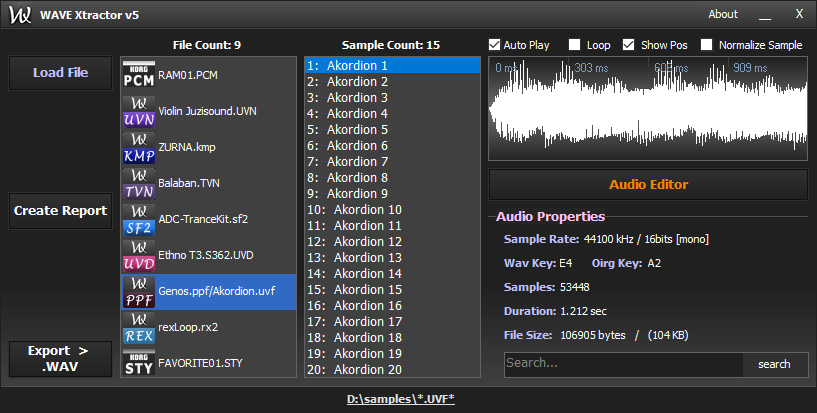
Extract .Wav sample data from KORG, Yamaha and other popular File formats.
Build: 02 January 2026
File Size: 5.20 MB

The save game mechanics in Resident Evil 3 Remake represent a significant evolution from the original game, reflecting broader trends in game design towards accessibility and player convenience. While this shift makes the game more approachable, it also alters the player's experience, reducing some of the tension and survival elements that characterized the original. Nonetheless, the remake successfully balances modern expectations with the essence of survival horror, offering a thrilling experience for both new and veteran players. As game design continues to evolve, it will be interesting to see how saving mechanics adapt, potentially offering new ways to engage with and experience the thrill of survival horror.
Several design goals likely motivated Capcom’s adjustments:
The remake diverges. It replaces ink ribbons and ubiquitous typewriter saves with a hybrid system: plentiful autosaves, manual saves tied to a consumable “RECORD” item (or equivalent—contextually implemented), and generous checkpointing during combat and transitional moments. The result is a lower barrier to returning to play and reduced punitive loss of progress.
The 2020 remake of Resident Evil 3 shifts away from the original's saving mechanics to a more modern, accessible approach. The game features an autosave system that frequently saves players' progress, supplemented by manual saving using a more readily available item. This change significantly reduces the risk of losing progress and allows players to focus more on strategy and less on conserving resources to save.
(specifically on Inferno difficulty), you are limited to a maximum of 5 manual saves
This will take you through PayPal, to complete the payment.
*approx €30 Eur
1 License [1 PC]
Free updates
Technical support
Refunds can only be accepted if you have not received your Activation Code.
The save game mechanics in Resident Evil 3 Remake represent a significant evolution from the original game, reflecting broader trends in game design towards accessibility and player convenience. While this shift makes the game more approachable, it also alters the player's experience, reducing some of the tension and survival elements that characterized the original. Nonetheless, the remake successfully balances modern expectations with the essence of survival horror, offering a thrilling experience for both new and veteran players. As game design continues to evolve, it will be interesting to see how saving mechanics adapt, potentially offering new ways to engage with and experience the thrill of survival horror.
Several design goals likely motivated Capcom’s adjustments: save game resident evil 3 remake
The remake diverges. It replaces ink ribbons and ubiquitous typewriter saves with a hybrid system: plentiful autosaves, manual saves tied to a consumable “RECORD” item (or equivalent—contextually implemented), and generous checkpointing during combat and transitional moments. The result is a lower barrier to returning to play and reduced punitive loss of progress. The save game mechanics in Resident Evil 3
The 2020 remake of Resident Evil 3 shifts away from the original's saving mechanics to a more modern, accessible approach. The game features an autosave system that frequently saves players' progress, supplemented by manual saving using a more readily available item. This change significantly reduces the risk of losing progress and allows players to focus more on strategy and less on conserving resources to save. As game design continues to evolve, it will
(specifically on Inferno difficulty), you are limited to a maximum of 5 manual saves
Social Media: